
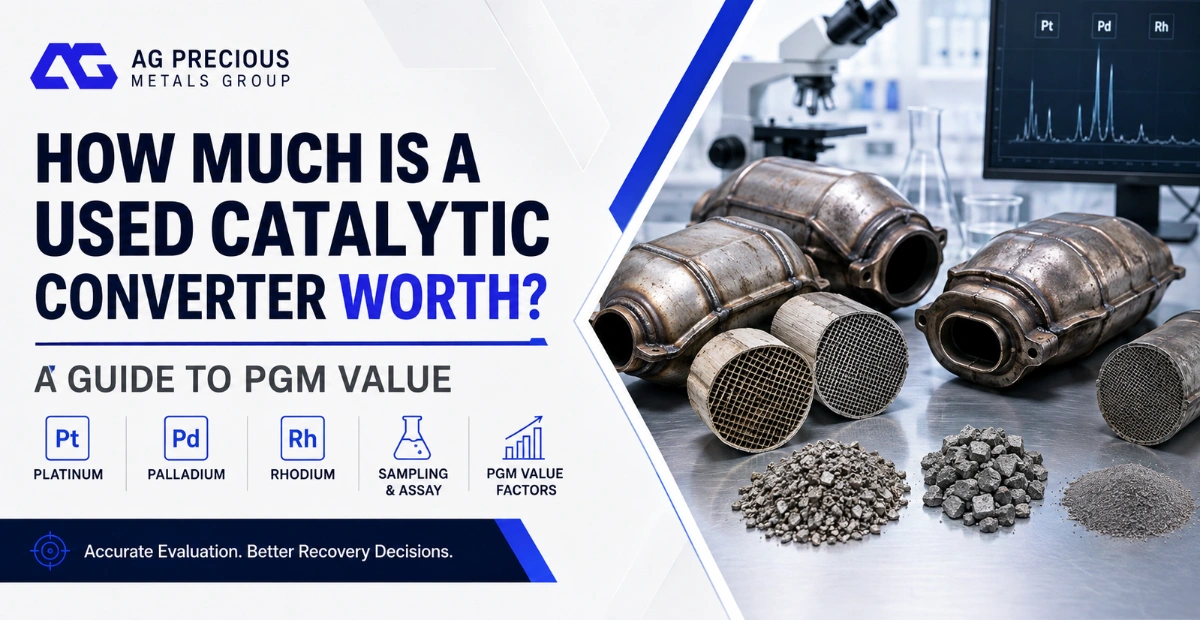
What Determines the Value of a Used Catalytic Converter?
The commercial value of a used catalytic converter is influenced by several connected factors. Two converters that look similar from the outside may contain different quantities of recoverable precious metals and may therefore have different recycling values.
The most important factors typically include:
- Converter type and application
- Platinum, palladium, and rhodium content
- Condition of the ceramic or metallic catalyst substrate
- Whether the converter is whole, cut, crushed, or processed into powder
- Batch consistency and material source
- Sampling and assay results where technical evaluation is required
- Current precious metal market conditions
- Processing and recovery considerations
This is why professional automotive catalyst recycling starts with understanding the material rather than assigning a value based only on appearance.
Which Precious Metals Are Found in Catalytic Converters?
Automotive catalytic converters commonly use platinum group metals, particularly platinum, palladium, and rhodium. These metals perform catalytic functions that help reduce harmful vehicle emissions.
Once a converter reaches the end of its useful life, the catalyst-bearing material may still contain recoverable quantities of these metals. This is the primary reason spent catalytic converters have recycling value.
Platinum
Platinum is widely used in catalytic applications because of its chemical stability and catalytic performance. The amount present can vary considerably between different converter designs and applications.
Palladium
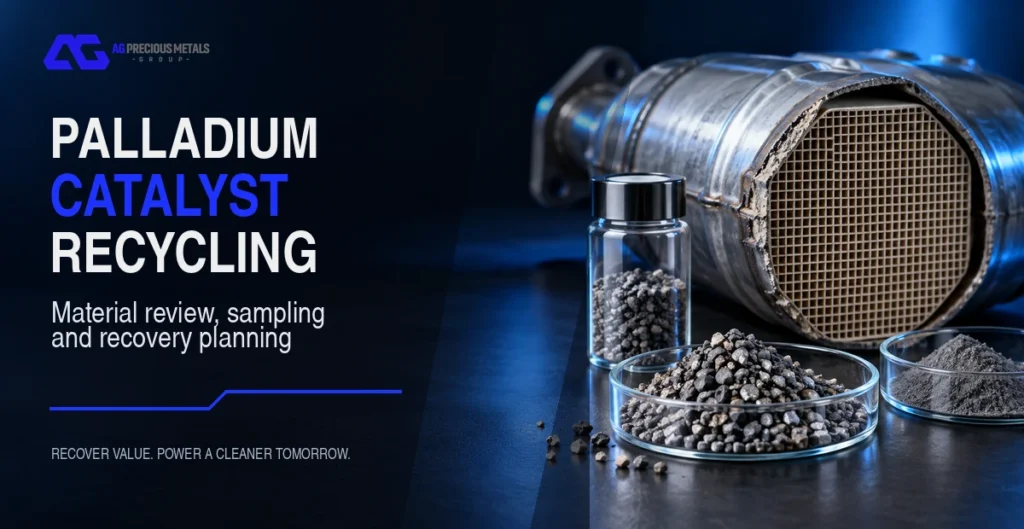
Palladium is another important PGM used in automotive emissions systems. Its concentration depends on the catalyst formulation, vehicle type, manufacturing period, and other technical factors.
Rhodium
Rhodium is particularly valuable in certain catalytic applications and may contribute significantly to the commercial potential of some converter materials, even when present in relatively small concentrations.
AG Precious Metals Group focuses on the recovery route for these metals through its PGM recovery services.
Why Converter Type Matters
Not every catalytic converter contains the same catalyst formulation. Different vehicles, engines, emission standards, manufacturers, and production periods can require different precious metal loadings.
This means identifying the converter or understanding the source of a material stream can be important during the initial evaluation.
A commercial batch may include:
- Complete used catalytic converters
- Cut converter shells
- Separated ceramic honeycomb
- Metallic catalyst substrates
- Crushed ceramic catalyst
- Prepared catalyst powder
- Mixed automotive catalyst material
Each form requires a different evaluation approach.
Whole Converters and Bulk Catalyst Material Are Valued Differently
A whole catalytic converter may initially be reviewed using identifying information, physical condition, quantity, photos, and converter characteristics.
Once catalyst material has been separated, crushed, mixed, or converted into powder, the evaluation process changes. At this stage, the value of the material increasingly depends on how representative the sample is and what technical analysis shows about the larger batch.
This distinction is particularly important for businesses processing larger quantities of catalyst material.
Why Visual Inspection Alone Is Not Enough
Appearance can provide useful information about the physical form and condition of catalyst material, but it cannot reliably determine the exact concentration of platinum, palladium, or rhodium within a processed batch.
For crushed catalyst, powder, mixed materials, pellets, fines, and other prepared streams, a technical evaluation may be required.
A representative sample must reflect the larger batch as accurately as practical. If the sample does not properly represent the batch, even a precise laboratory result may provide a misleading basis for commercial settlement.
Learn more about AG Precious Metals Group’s sampling and assay services.
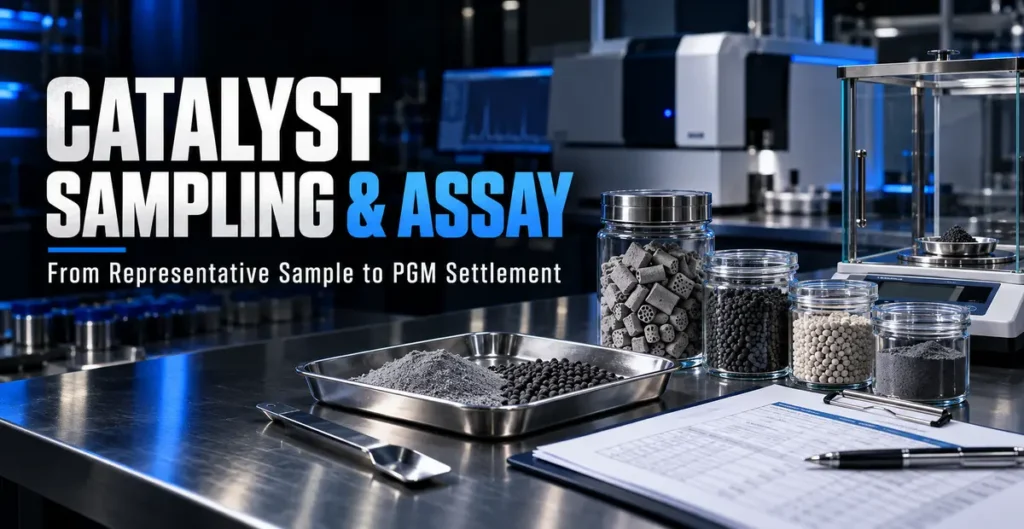
How Sampling and Assay Help Determine Catalyst Value
Sampling and assay create a more technical basis for evaluating prepared catalyst material.
The process can involve reviewing:
- Material type and source
- Total batch quantity
- Particle size
- Material consistency
- Moisture or contamination considerations
- Sample preparation
- Assay data
The objective is not simply to test a small quantity of material. The objective is to establish whether that sample reasonably represents the entire commercial batch.
This becomes increasingly important as material moves from individual converter units toward crushed, blended, or powdered catalyst streams.
How PGM Market Prices Affect Catalyst Value
Platinum, palladium, and rhodium are internationally traded metals, so changes in precious metal markets can influence the commercial value of PGM-bearing catalyst material.
However, the market price of a refined metal should not be confused with the value of an unprocessed catalytic converter.
A converter contains catalyst-bearing material rather than pure refined metal. Its commercial value must therefore be considered in relation to recoverable content, material condition, evaluation method, processing requirements, recovery terms, and the commercial structure of the transaction.
Can You Determine Converter Value From a Photo?
Photos can be useful during an initial review. They may help identify the material form, converter condition, quantity, packaging, markings, or whether the material is whole, cut, or already processed.
However, photos alone generally cannot establish the exact PGM content of crushed or mixed catalyst material.
For this reason, businesses requesting an evaluation should provide as much material information as possible rather than relying only on images.
What Information Should You Provide for an Evaluation?
If you have catalytic converters or automotive catalyst material ready for review, providing clear information can make the initial evaluation more efficient.
Useful information may include:
- Approximate quantity or batch weight
- Material type
- Whole, cut, crushed, or powdered condition
- Source of the material
- Clear photographs
- Available converter identification or reference information
- Existing assay or sampling documentation, if available
- Packaging and batch details
Understanding Value Before Recycling
The key point is simple: there is no single price that accurately represents every used catalytic converter.
Converter value begins with understanding what material is present, how it has been prepared, and how its precious metal potential can be evaluated. Whole units, ceramic honeycomb, crushed catalyst, and catalyst powder should not automatically be treated in the same way.
For professional businesses working with larger quantities or prepared catalyst streams, representative sampling, technical evaluation, and a clear recovery route can provide a stronger basis for commercial decisions.
Request a Catalyst Evaluation
AG Precious Metals Group works with businesses handling used catalytic converters and PGM-bearing catalyst materials. Our evaluation route is shaped around the material type, physical condition, quantity, and the technical requirements of the batch.
If you have whole converters, ceramic catalyst, crushed material, or catalyst powder available for review, contact AG Precious Metals Group and provide your material details, quantity, condition, and available photographs.
You can also explore our materials we process page to learn more about catalyst and PGM-bearing material streams.
Join the discussion